
This photographic tour will begin and end in Brazil's original capital city of Salvador but concentrates mainly on the remarkable and varied landscapes of Chapada Diamantina, The Diamond Plateau. Brazil is the fifth largest country in the world. Salvador and The Diamond Plateau are located to the east of the country in Bahia, its fourth largest state. At over 567,000 sq. km., this region spans an area larger than France.


Brazil
Salvador & the Diamond Plateau with David Ward
16 Days
Superb photographic exploration of this colourful state from the old capital
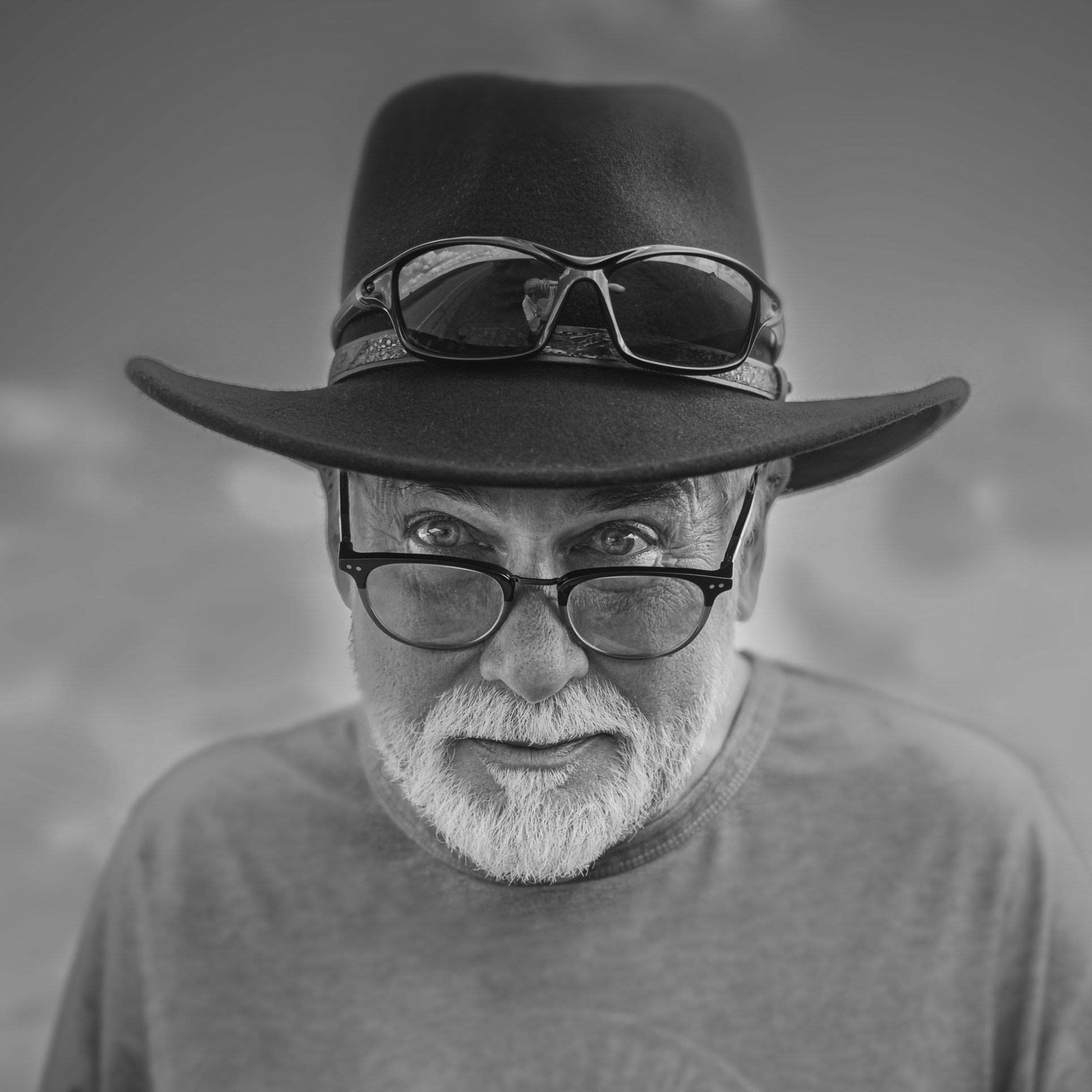
David is a renowned landscape photographer from the UK and has been teaching photography and travelling the world with a camer and small groups since 1999, having now run over 200 tours.
His soft and friendly demeanour lends itself well to establishing a good rapport with participants. A key to the success of his trips is his thoughtful and inspiring approach to photography, particularly seeing abstracts. The colours and diversity in Bahia lend themselves totally to David's style and we understand his excitement for this photo tour to Salvador and Chapada Diamantina.
 |
Pelourinho, the historic centre of Salvador |
|
The colourful & atmospheric towns of Mucugê & Lençóis |
|
Table top mountains, moro, of the Chapada Diamantina |
|
Waterfalls & wetlands |
|
Wide range of habitats in Brazil's most mountainous region |
|
Guided photography excursions with David Ward & 2 local guides |
|
Boat excursion on Marimbus wetlands |
 |
Depart UK. Arrive Salvador |
 |
Photography in the city |
 |
Fly to Lençóis |
 |
Photography in Parque da Muritiba |
 |
To Mucugê |
 |
Photography around Mucugê |
 |
Visit Tiburtino |
 |
Visit Guinpe |
 |
To the ancient village of Igatu |
 |
Photography around Igatu |
 |
To Roncador waterfalls & to Lençóis |
 |
To Marimbus wetlands and other photographic sites in the area |
 |
To Cradle Mountain |
 |
To Capão and Camelo for photography |
 |
Fly to Salvador & depart Brazil |
 |
Arrive UK. |
This photographic tour will begin and end in Brazil's original capital city of Salvador but concentrates mainly on the remarkable and varied landscapes of Chapada Diamantina, The Diamond Plateau. Brazil is the fifth largest country in the world. Salvador and The Diamond Plateau are located to the east of the country in Bahia, its fourth largest state. At over 567,000 sq. km., this region spans an area larger than France.
Bahia’s culture is a fusion of South American, African and European influences. Portuguese and African cultures are particularly prominent in Salvador. It has been granted UNESCO World Heritage status for its colourful Baroque colonial architecture. It is the home of samba and capoeira, a unique martial art dance form. We will get a chance to witness a highly athletic performance on our second night in Salvador.
We will concentrate our photographic efforts in Pelourinho, the historic centre of the city. We can walk out from our hotel and start photographing almost immediately. Everywhere you look are wonderful façades, colourful murals, street performers and especially batala drummers. Their samba-reggae percussion music gained worldwide recognition when Paul Simon released his album Rhythm of the Saints in 1990. Salvadorean drummers provide the backbone for the opening track, The Obvious Child. A short walk takes us to an expansive view across the port area and the Bay of All Saints. Nearby, the Elevador Lacerda, a 72 metre high elevator, transports up to 30,000 people a day from sea level to Pelourinho.
From Salvador we fly to the Diamond Plateau in the interior of Bahia. This mountainous region was named so after diamonds were discovered in 1844. They were initially found in a river near the small town of Mucugê, towards the south of the plateau. Further north, the town of Lençóis became the centre of mining until the late 20th century when accessibility to diamonds became much easier in southern Africa. Many small mines can still be found around Lençóis. Geologically the area sits on the Brazilian shield and has among the oldest rocks in the world, dating before the Precambrian era of 570 million years ago, a time of Gondwanaland and when Brazil and Namibia were one.
Morro (table-top mountains) and rugged peaks rise from wooded valleys to between 1000m to 2000m above sea level, marking Chapada Diamantina as one of the most mountainous and scenic parts of Brazil.
The region became a national park in 1985. Covering over 1500 sq. km., it has a wealth of natural treasures. Lost valleys and the almost lost worlds of the morro, numerous waterfalls, caves with crystal clear pools all combine beautifully with the cultural wealth. In terms of biomes the Atlantic rainforest, Mata Atlantica, is found on lower slopes whilst caatinga dominates the drier regions. Caatinga is unique to the northeast of Brazil and is characterised by thorny arid scrub. Cerrado or savannah grasslands can also be found in places. With these three major biomes and transitions, biodiversity is high throughout the national park.
We will take an early morning canoe trip through a quite different biome, the vast swampland of Marimbus, nicknamed the mini Pantanal. In the early morning quiet we will glide smoothly across the mirror perfect waters, overhung with palm trees. We might see capybara on little sand bars or drinking from the edge of the papyrus. Unfamiliar bird calls echo through the air punctuated by the sounds of even more unfamiliar primates. The papyrus parts from time to time to reveal open water partially covered by lily pads. It's a place to photograph wildlife but also a great opportunity for abstract images of reflections.
There are many endemic flora and fauna to be found in Chapada Diamantina. Sempre viva is a distinctive white flower, said to be everlasting. Of the numerous bird species, probably the most notable are the hooded visorbearer hummingbird and Sincorá antwren, both endemic with a very small range in these hills. The critically endangered golden-bellied capuchin, a new world monkey, also inhabits the forests here. Other endemic species include the Rio de Lençóis tree frog, Bokermannohyla oxente (clearly the scientists were having a laugh when it was named; oxente is not translatable but is an exclamation of surprise!) and fascinatingly exotic three-banded armadillo.
Whilst in Chapada Diamantina we’ll have two key bases.
The first is Lençóis, which sits about 500m above sea level. It still has a small town feel with a welcoming atmosphere among its narrow, cobbled streets. It sees more tourists as it is the stepping out point for treks in Chapada Diamantina. There is a lively festival vibe along Rua Miguel Calmon where restaurants and bars, many with live music, spill out onto the narrow street.
David's favourite location near town is the Parque Municipal da Muritiba, a protected area along the banks of the Rio Lençóis. Just as you enter the park you come across a large area of waterworn rock with incredible colours and patterns. This conglomerate was laid down as a riverbed hundreds of millions of years ago, buried deep in the Earth's crust and has now resurfaced. It's an absolute delight!
Our second base, Mucugê, is around 3 hours’ drive south of Lençóis. It has just over 9,000 inhabitants and lies at almost 1000m above sea level. Characterised by single storey colourful houses, it is a pretty little town with plenty of photo opportunities when you wander around the streets. Perhaps surprisingly one of its best known sites is the cemetery. Sitting at the foot of a rocky mountainside, the starkly white geometric tombs look particularly intriguing in the crossover light of dusk. Mucugê also provides access to the south of the national park and numerous sites in the area. The mornings are often cool as the village frequently has its head in the clouds until a couple of hours after sunrise. This is a great time to be out photographing the quiet streets.
We will have the expertise of two local guides throughout our time in Chapada Diamantina. The maximum group size is 10.
Davids & Saskia, his partner recently returned from a recce for this tour and are so enthused about the possibilities. The atmosphere in the city and towns is friendly and energetic. In the countryside tranquillity reigns, although it occasionally plays second fiddle to a thundering waterfall. We do hope you can join us.
September - October
Additional Details - Cost, Dates, Rating etc.
Cost from £
£7,650 per person
The cost includes: International and domestic flights, single rooms full board, transfers, national park entrance fees, activities mentioned above, photo tuition by David Ward
The cost excludes:
Passport, visa (if required), insurance, medication; items of personal expenditure e.g. drinks, any additional activities, tips, statutory increases beyond our control
Price is subject to availability of flights at the time of booking them.
Departure Dates
29 September - 12 October 2026
Photography Experience
You do not have to have the latest camera equipment but you have to have a willingness to explore possibilities with photography. The photo tour is open to anyone with an interest in photography, whatever they choose to create images with.
Difficulty
Generally easy photography holiday with some walks on uneven or steep ground. Steps may be encountered.
Flights
Flights in Economy class are included and will be booked from London Heathrow to Salvador via Lisbon on TAP Portugal.
Time
GMT -3 hours
All other areas of Brazil. We are happy to discuss add-ons to the this trip to any region of Brazil.

More Holiday Ideas


Tailor-made - Our Australia holidays are unique to you

--- Interested? Get in touch ---
Complete our enquiry form with your travel plans:
RECEIVE OCASSIONAL NEWS ABOUT OUR HOLIDAYS
Sign up for our newsletter: